Yes. Across 32 randomized trials in inactive adults, walking programs raised aerobic capacity by about 3 ml/kg/min on average. Interval walking does more: Japanese studies report gains of 8 to 9% in a controlled trial and 14% in a 679-person program. That matters for your heart. In a meta-analysis of 33 studies, every 1-MET (3.5 ml/kg/min) of extra fitness was linked with a 13% lower risk of death and a 15% lower risk of heart disease events. The catch is intensity: an easy stroll helps beginners, but the bigger gains come from brisk efforts.
What is VO2 max and why does it matter?
VO2 max is the most oxygen your body can take in and use during hard exercise, measured in milliliters per kilogram of body weight per minute (ml/kg/min). It's the standard measure of cardiorespiratory fitness: how well your heart, lungs and muscles work together when you push.
It matters because it predicts long-term health unusually well. Kodama et al. (JAMA, 2009) pooled 33 studies with over 100,000 people. Each 1-MET higher level of fitness (about 3.5 ml/kg/min) was linked with a 13% lower risk of death from any cause and a 15% lower risk of coronary heart disease or cardiovascular events. People with low fitness (under about 7.9 METs) had a 70% higher risk of death than people with high fitness.
VO2 max also falls with age. In the US FRIEND registry of 7,783 lab treadmill tests (Kaminsky et al., 2015), the median dropped by roughly 10% per decade:
| Age | Median VO2 max, men | Median VO2 max, women |
|---|---|---|
| 20 to 29 | 48.0 ml/kg/min | 37.6 ml/kg/min |
| 30 to 39 | 42.4 | 30.2 |
| 40 to 49 | 37.8 | 26.7 |
| 50 to 59 | 32.6 | 23.4 |
| 60 to 69 | 28.2 | 20.0 |
| 70 to 79 | 24.4 | 18.3 |
Source: FRIEND registry, Kaminsky, Arena and Myers, Mayo Clinic Proceedings, 2015. 50th percentile of directly measured VO2 max in US adults without cardiovascular disease.
What does the research say about walking and VO2 max?
Walking reliably raises VO2 max in people who aren't very active, and in the trial that compared them head to head, fast intervals produced significantly bigger gains than steady walking. The key evidence:
- Regular walking: about +3 ml/kg/min. A meta-analysis of 32 randomized trials in inactive adults (Murtagh et al., Preventive Medicine, 2015) found walking programs of 4 weeks or more increased aerobic capacity by 3.04 ml/kg/min, and also lowered blood pressure, waist size and weight. That's close to the 1-MET step that Kodama linked with lower risk.
- Interval walking beat steady walking. In a 5-month randomized trial of 246 adults averaging 63 years (Nemoto et al., 2007), 3 minutes fast / 3 minutes slow raised peak aerobic capacity by 8% (cycling test) and 9% (walking test), significantly more than walking 8,000+ steps a day at a moderate pace.
- Fast minutes are what count. In 679 people doing interval walking for 5 months (Masuki et al., 2019), estimated peak aerobic capacity rose 14% on average. Improvement grew with fast-walking time up to about 50 minutes a week, then plateaued. Slow and total walking time didn't predict gains.
Two things shape your personal result. The least fit start gaining fastest, so beginners see the biggest jumps. And genes play a real part: Apple's own research summary notes that genetics explain roughly 20 to 60% of the variation in how much VO2 max responds to training. If your number moves slowly, that's not failure. The health benefits of the exercise still count.
If you want the practical comparison of interval walking with a daily step goal, I cover it in Japanese walking vs 10,000 steps. The short version: steps for everyday movement, intervals for fitness.
How do I measure VO2 max with Apple Watch?
Apple Watch estimates it automatically and shows it as Cardio Fitness in the Health app. According to Apple's Cardio Fitness support page and its 2021 white paper:
- It comes from outdoor walks, runs and hikes. The watch compares your heart rate with your pace. Estimates need relatively flat ground (under about 5% incline), a good GPS and heart rate signal, and enough effort to raise your heart rate meaningfully.
- It covers 14 to 60 ml/kg/min on Apple Watch Series 3 or later, and classifies your level for ages 20 and up. You can opt in to notifications if your level is low for your age and sex.
- Heart-rate-lowering medication can skew it. Apple says conditions or medications that limit heart rate may cause an overestimate, so add them in Health Details.
How accurate is it? Useful for trends, not exact. In an independent study of 30 people (Lambe et al., PLOS ONE, 2025), Apple Watch underestimated lab-measured VO2 max by about 6 ml/kg/min on average, with an average error of about 13%. A 2024 study of the Series 7 found a similar error of about 16%. So compare yourself with yourself, over weeks and months.
My tip: start an Outdoor Walk workout on your watch for your brisk walks, and use a flat route when you can. That gives the watch the kind of data it needs to update your estimate.
A 12-week walking plan to raise VO2 max
Build up to about 50 to 60 minutes of fast walking a week, the range where the 2019 data leveled off, spread over 4 days. Start lighter than you think you need to:
| Weeks | Session | Days / week | Fast minutes / week |
|---|---|---|---|
| 1 to 2 | 2 min fast / 3 min slow × 3 | 3 | 18 |
| 3 to 4 | 3 min fast / 3 min slow × 4 | 3 to 4 | 36 to 48 |
| 5 to 8 | 3 min fast / 3 min slow × 5 | 4 | 60 |
| 9 to 12 | Same, but walk the fast blocks faster or add a gentle hill | 4 | 60 |
Add 3 to 5 minutes of easy walking to warm up and 2 to 3 to cool down. Then:
- Use the talk test. Fast blocks: a few words at a time. Slow blocks: you recover enough to feel ready again.
- Change one thing at a time. Add a round, a day, or speed, not all three in the same week.
- Keep your step habit on the other days. Everyday movement still matters for long-term health; see how many steps a day the research supports.
- Check with a doctor first if you're new to exercise, returning after a long break, or have heart or blood pressure concerns. Stop and get advice if you feel chest pain, dizziness or unusual breathlessness.
Timing the intervals without watching a clock
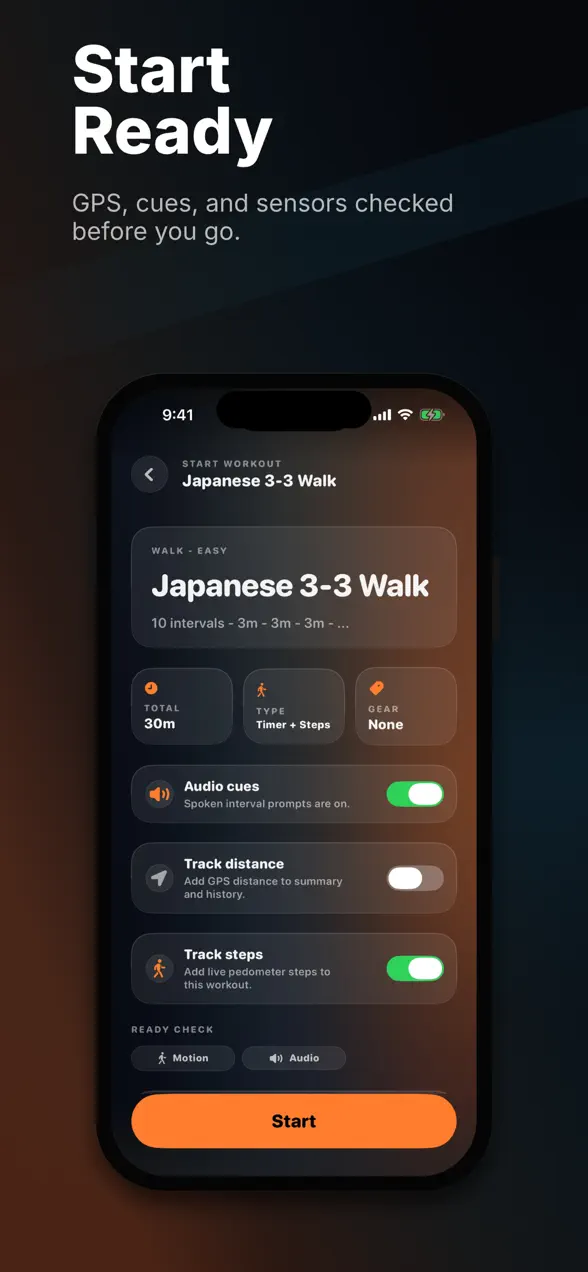
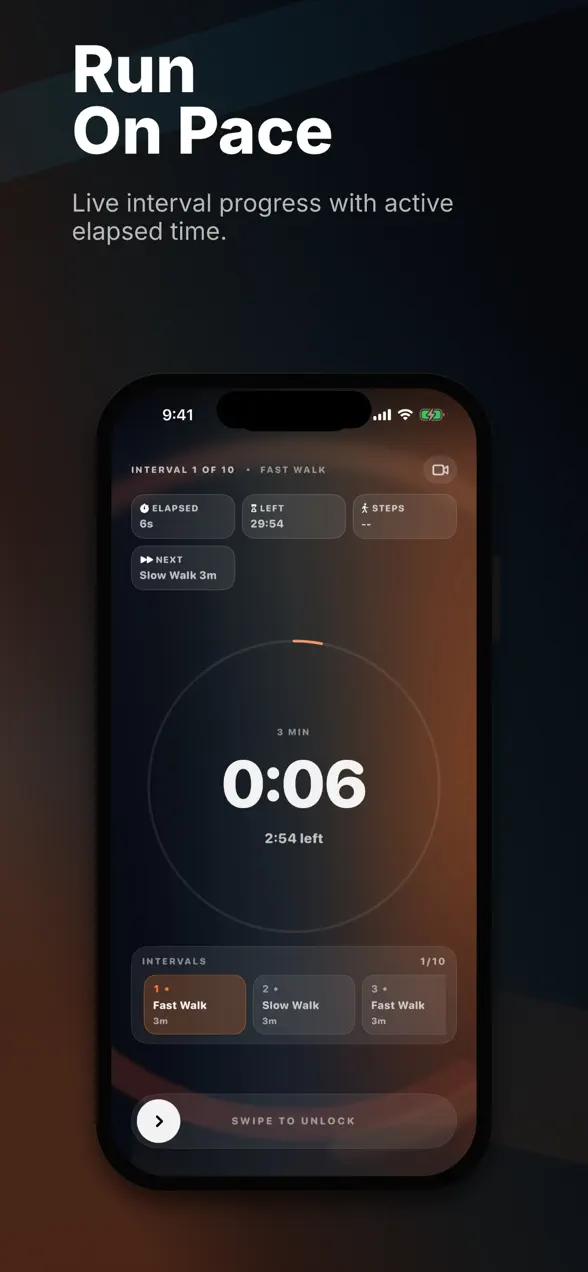
Counting minutes while breathing hard is the part people hate. I built Interval Timer: Tempo for this kind of workout: it has a ready-made Japanese 3-3 walking preset, you can build the lighter week 1 to 4 versions yourself, and it gives spoken and haptic cues for each switch without stopping your music. It's free with an ad before a workout starts; Tempo Premium ($0.99 a week or $5.99 lifetime) removes ads and adds unlimited custom workouts and live heart rate. It needs iOS 26 on iPhone or iPad. The full Tempo review has the details, and for easy days, Simply Step tracks your daily steps.

The bottom line
Walking can raise your VO2 max, especially if you're starting from a low base. Regular walking adds about 3 ml/kg/min on average; building up to 50 or 60 minutes a week of genuinely brisk intervals adds more. Measure with your watch, judge the trend over months, and let the fast minutes do the work.
Frequently asked questions
How long does it take to improve VO2 max by walking?
Expect weeks to months. Apple's research summary notes that training programs of 6 to 12 weeks generally improve VO2 max by about 5 to 10%. The interval walking studies from Japan measured gains of 8 to 14% after 4 to 5 months. Beginners usually improve fastest.
What is a good VO2 max for my age?
In the US FRIEND registry of treadmill tests, the median VO2 max was 48.0 ml/kg/min for men and 37.6 for women in their 20s, falling to about 32.6 and 23.4 in their 50s and 24.4 and 18.3 in their 70s. Being above the median for your age and sex is good; the bigger health gain comes from moving up from the lowest levels.
How accurate is Apple Watch Cardio Fitness?
Good enough for trends, not a lab result. In a 2025 validation study of 30 people, Apple Watch underestimated lab-measured VO2 max by about 6 ml/kg/min on average, with an average error of about 13%. Compare your own readings over weeks and months rather than treating one number as exact.
Is walking enough to raise VO2 max if I am already fit?
Probably not at an easy pace. The least fit people gain the most from walking. If brisk walking no longer gets you breathing hard, add hills, walk the fast intervals faster, or mix in jogging so the effort stays somewhat hard.
Sources
- Murtagh EM, Nichols L, Mohammed MA, Holder R, Nevill AM, Murphy MH. The effect of walking on risk factors for cardiovascular disease: an updated systematic review and meta-analysis of randomised control trials. Preventive Medicine. 2015;72:34-43. doi:10.1016/j.ypmed.2014.12.041
- Nemoto K, Gen-no H, Masuki S, Okazaki K, Nose H. Effects of high-intensity interval walking training on physical fitness and blood pressure in middle-aged and older people. Mayo Clinic Proceedings. 2007;82(7):803-811. doi:10.4065/82.7.803
- Masuki S, Morikawa M, Nose H. High-intensity walking time is a key determinant to increase physical fitness and improve health outcomes after interval walking training in middle-aged and older people. Mayo Clinic Proceedings. 2019;94(12):2415-2426. doi:10.1016/j.mayocp.2019.04.039
- Kodama S, Saito K, Tanaka S, et al. Cardiorespiratory fitness as a quantitative predictor of all-cause mortality and cardiovascular events in healthy men and women: a meta-analysis. JAMA. 2009;301(19):2024-2035. doi:10.1001/jama.2009.681
- Kaminsky LA, Arena R, Myers J. Reference standards for cardiorespiratory fitness measured with cardiopulmonary exercise testing: data from the Fitness Registry and the Importance of Exercise National Database. Mayo Clinic Proceedings. 2015;90(11):1515-1523. doi:10.1016/j.mayocp.2015.07.026
- Apple. Track your cardio fitness levels. support.apple.com/en-us/108790. Accessed September 2026.
- Apple. Using Apple Watch to Estimate Cardio Fitness with VO2 max. May 2021. apple.com (PDF)
- Lambe R, O'Grady B, Baldwin M, Doherty C. Investigating the accuracy of Apple Watch VO2 max measurements: a validation study. PLOS ONE. 2025;20(5):e0323741. doi:10.1371/journal.pone.0323741
- Caserman P, Yum S, Göbel S, Reif A, Matura S. Assessing the accuracy of smartwatch-based estimation of maximum oxygen uptake using the Apple Watch Series 7: validation study. JMIR Biomedical Engineering. 2024;9:e59459. doi:10.2196/59459
First published . Updated September 26, 2026: refocused on whether walking improves VO2 max, added study results and real VO2 max reference values with links (replacing an illustrative chart), added how Apple Watch estimates it and how accurate it is, and fixed a typo.