Yotyan, Unc Ball, and Star Cluster Ball are three names for one kind of game: a Chinese tabletop skill game (星罗球, xīng luó qiú) that spread through livestreams and short videos. You launch a ball up a gently sloped table, gravity rolls it back, and you try to settle it in one of 21 scoring slots. Here is where the names come from, how the real game works, and how to play it free on your phone.
So what is Yotyan, actually?
Yotyan is a precision table game. Players release a ball from a small launching tray so it rolls up a table tilted at 4.99 degrees, slows, and rolls back down. The aim is to have it settle into a slot on one of three star-shaped discs, and to outscore an opponent over two halves. It rewards touch and aim, not strength.
YoTyan is also a company. Its website calls itself the game's "Original Inventor & Manufacturer". It says the project began in 2020 under a design founder named Meng, and that it holds patents and trademarks for the table. I haven't found independent reporting that confirms the origin story, so treat it as the maker's own account. Other companies sell similar tables too.
Why does it have so many names?
Because the game spread through clips and livestreams in several languages at once, and each audience picked up a different label:
- 星罗球 (xīng luó qiú) is the name used by the Chinese livestream matches that get re-streamed abroad. The English channel Star Cluster Ball says the game is "originally known as 星罗球" and that the name "comes from stars arranged in patterns". That's where the English name Star Cluster Ball comes from.
- 摇天球 (yáo tiān qiú) is a second Chinese name. A YouTube channel under that name has posted videos of the game since 2023, including one titled "摇天球 – YaoTianBall – A Chinese ball game is creating" (September 28, 2023).
- Yotyan (YoTyan) is the brand name of the maker above. Its site never explains the name. It sounds like a stylized spelling of 摇天 (yáo tiān), but I couldn't find the company saying so, so treat that as a guess.
- Unc Ball (UncBall) is the English-speaking internet's nickname. The earliest use I found is a TikTok post from May 9, 2025 calling it "Uncball, a brand-new ball game just invented by a Chinese person". Livestream re-uploads now use it in their titles, for example "Star Cluster Ball (Chinese UNC Ball)". Why "unc" stuck is unclear. I couldn't find a reliable source, so I won't guess.
So if you've seen clips called Yotyan, Unc Ball, or Star Cluster Ball, you've been watching the same style of table, sometimes with slightly different house rules.
How the real Yotyan table works
The current YoTyan table is 2.2 m long, 1.2 m wide and weighs 60 kg, with a 4.99-degree slope. These specs are from the maker's own product and about pages:
| Table | 2200 × 1200 × 740 mm, 60 kg net (YoTyan table specs). The homepage also lists a 228 × 141 cm size. |
|---|---|
| Surface | A wood-based "HENF-grade" board top. The first two generations were heavy marble tables, and one weighed 479 kg (YoTyan about page). |
| Slope | 4.99 degrees |
| Scoring zone | Three star-shaped discs ("starfish"), seven slots each, 21 slots in total (YoTyan) |
| Balls | 24 in total, 12 per player; red always starts. Made of phenolic resin with mineral fillers. |
| Launch | A "shaker tray" of acrylic and solid wood |
| Bell | At the center of the table, rung when a player runs out of balls |
You may see other numbers online. One seller's page, for example, lists a 2.35 m by 1.2 m marble table, 125 g ABS balls, and plates named Venus, Mars and Jupiter (Slot Gather). Those details describe that seller's table, not the YoTyan spec, and the same page lists a 228 × 141 cm size elsewhere. When sources disagree, I've gone with the maker.
How scoring works
Under the rules published on YoTyan's site (compiled by a fan, Jeff Burnett, and credited there), a ball scores only when it drops into a slot:
- Base points: 1 per ball on the bottom disc, 2 on the middle disc, 3 on the top disc.
- Touching ball: a ball that lands next to another ball scores double and earns another shot.
- Sole Bonus Slot: the only "touching ball" slot on a disc scores triple and earns another shot.
- Break shot: the first ball to land on a disc scores normally and earns another shot.
- Bridge ball: a ball stuck on a disc but not in a slot. It scores nothing, but creating one earns another shot, and knocking bridge balls in or free has its own rules.
A round has a first half and a second half, and the players swap sides and ball colors at the break. There is "no time limit on a game. No game clock." Play ends when all 21 slots are filled, or when a player runs out of balls. Then they ring the bell and the other player plays each remaining ball once.
Livestream rules can differ. A detailed fan write-up of the 星罗球 YouTube streams (January 2026, in Japanese) describes 6-minute halves and a top disc worth 5 points, not 3. So if the scores in a clip look odd, you're probably watching a local variant.
Why Yotyan went viral
It clicks in seconds. The ball climbs, hesitates, and drops into a slot, and head-to-head games stay close to the last shot. That's why it works as something to watch as well as to play. I couldn't find press coverage with hard numbers, but the channels give a sense of scale. The YoTyan Arena YouTube channel has about 265,000 subscribers as of September 2026, and a single re-streamed "Chinese UNC Ball" match from January 26, 2026 has more than 427,000 views.
How to play Yotyan and Unc Ball on your phone
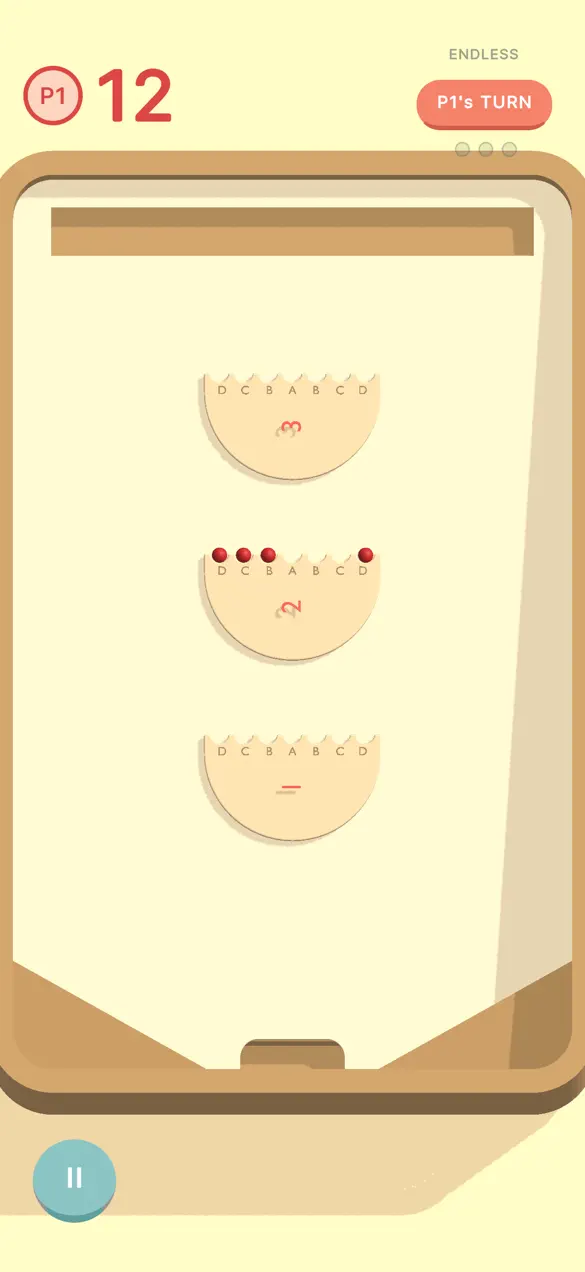
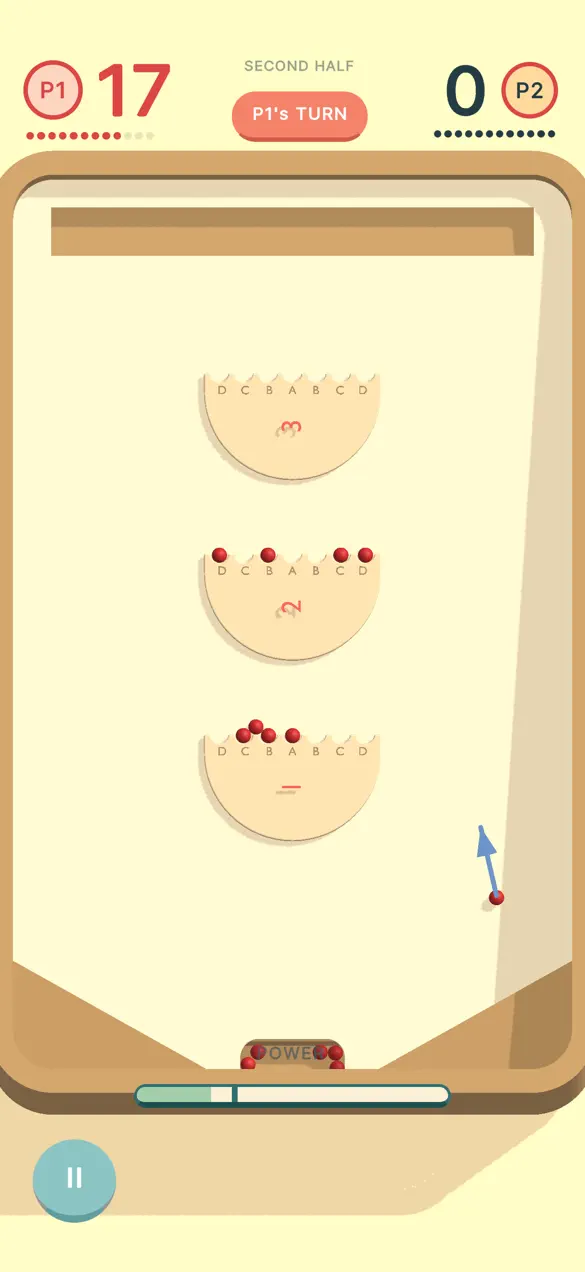
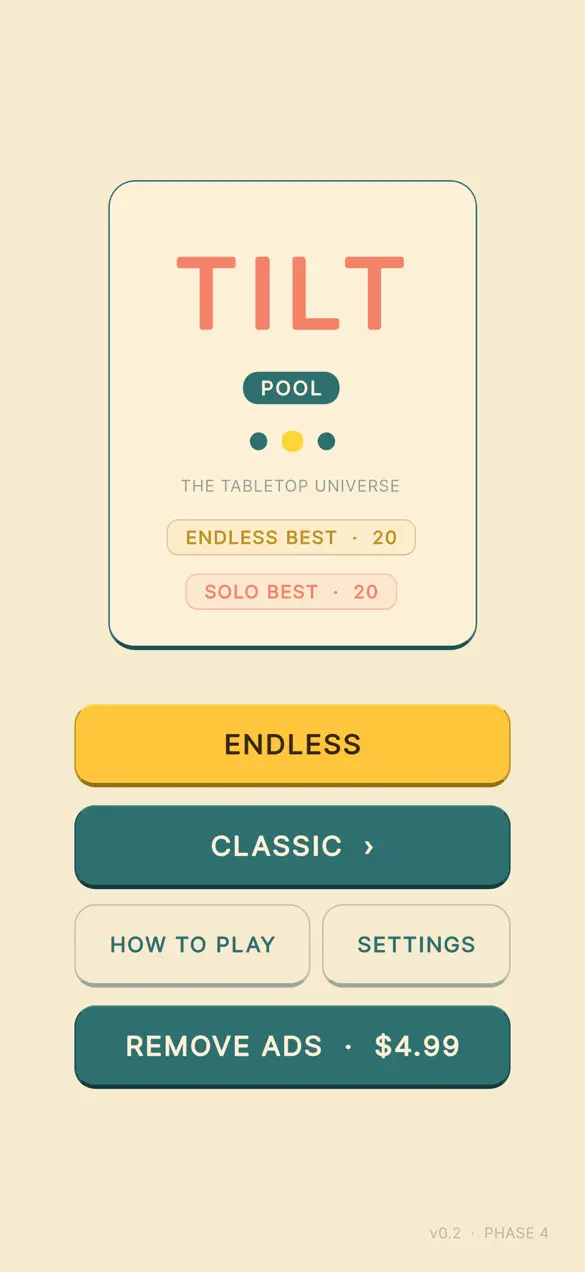
You don't need a two-meter table to get the feel of it. Tilt Pool: Star Cluster Ball recreates the table on iPhone, iPad and Android. You drag back on a ball like a slingshot, send it up the slope, and aim for 21 slots on three discs worth 1, 2 and 3 points, with touching-ball doubles, bridge balls, the bell and a halftime.
- Modes: Solo (24 balls over two halves), Endless (three strikes), 1v1 local pass-and-play, and VS AI with four levels: Novice, Strategist, Master and Perfect. There is no online play.
- Price: free, with non-personalized rewarded ads to continue an Endless run. Remove Ads is a one-time $4.99.
For aiming and scoring tips, read how to play Star Cluster Ball on your phone. For store links, see the Tilt Pool app page.
The short version
- Yotyan, Unc Ball, and Star Cluster Ball (星罗球, also 摇天球) are names for the same Chinese tabletop skill game.
- You launch a ball up a 4.99° table and try to land it in 21 slots on three star discs worth 1, 2 and 3 points.
- YoTyan is also the company that says it invented and manufactures the table. Where "Unc Ball" comes from is unclear.
- You can play a recreation, Tilt Pool, free on iOS and Android.
Frequently asked questions
Are Yotyan, Unc Ball, and Star Cluster Ball the same game?
Yes, they are names for the same Chinese tabletop skill game. Star Cluster Ball is the English name of 星罗球 (xīng luó qiú), 摇天球 (yáo tiān qiú) is another Chinese name, YoTyan is the brand of the company that says it invented and manufactures the table, and Unc Ball is a nickname that spread online in 2025. House rules can vary between tables and livestreams.
What is the Chinese name for Unc Ball?
The name used on the Chinese livestreams is 星罗球 (xīng luó qiú), which English channels translate as Star Cluster Ball. The game also appears online as 摇天球 (yáo tiān qiú).
How do you score in Star Cluster Ball?
Under the rules on YoTyan's site, a ball in a slot scores 1, 2 or 3 points depending on the disc. A ball that lands next to another ball scores double, and the Sole Bonus Slot scores triple. Some livestreams use local rules, such as a top disc worth 5 points and 6-minute halves.
Is there a Yotyan or Unc Ball app?
Yes. Tilt Pool: Star Cluster Ball, which I make, recreates the table on iPhone, iPad and Android. It has Solo, Endless, local 1v1 and four VS AI levels. It is free with optional rewarded ads, and Remove Ads costs $4.99.
First published . Updated September 26, 2026: checked every spec against the maker's site and rules, corrected the table size and surface, removed plate names and ball weights I couldn't confirm, and rewrote the section on where the names come from.